Investing8 min read
Where to Buy Bitcoin in the US: Exchanges, Apps and Brokerages Compared
Where to buy bitcoin in the US: how exchanges, payment apps, brokerages, ATMs and peer-to-peer sales differ on custody, withdrawals, ID checks and fees.
By Christopher CannucciariPublished
On this page
Key takeaways
- No one place suits everyone. What matters is what you get (coins or a claim on a company), whether you can withdraw to your own wallet, how fees are charged and which services your state allows.
- Exchanges, payment apps and bitcoin-focused apps usually hold the bitcoin for you. A brokerage that offers a spot Bitcoin ETF gives you fund shares and no coins at all.
- As of October 2026, the official pages of Cash App, Coinbase, Kraken, PayPal and Strike each describe identity verification and a way to send bitcoin to an outside address, with different conditions.
- Fees come as a trading fee, a spread, a payment-method charge and a network fee on withdrawal. Compare the final amount of bitcoin you receive.
- Companies are named here only as examples drawn from their own pages. This is not a ranking, a recommendation or advice.
What kinds of places sell bitcoin in the US?
Five kinds of places sell bitcoin to US residents: crypto exchanges, payment or bitcoin apps, brokerages with spot Bitcoin ETFs, bitcoin ATMs and individual sellers. They differ most in what you end up holding, as the table shows.
| Kind | What you get | Move it to your own wallet? | Main cost or risk |
|---|---|---|---|
| Crypto exchange | A balance the company holds for you | Usually, to an address you add | Trading fee and spread; the company can fail |
| Payment or bitcoin app | A balance inside the app | Depends on the app and your account | Spread and fees; custody terms |
| Brokerage (spot ETF) | Fund shares, not coins | No, shares are not bitcoin | Fund and brokerage costs |
| Bitcoin ATM | Bitcoin sent to an address you give | It goes straight to your wallet | Fees, and scams that start with a stranger |
| Person to person | Bitcoin sent by a seller | It goes straight to your wallet | Fake payment proof, scams |
Bitcoin ETFs: What They Are and What They Mean for Investors covers the fund route, and How to Buy Bitcoin on Robinhood looks at an app that offers crypto trading next to an ordinary brokerage account. Bitcoin ATMs: How They Work and Common Bitcoin Scams cover the last two. The rest of this page looks at the first two rows.
What do five platforms’ own pages say?
Each paragraph below reports only what that company’s help, fee or legal pages say as of October 2026, in alphabetical order, and those pages change. The screenshots were taken from Europe, so pages for US customers can look different.
Cash App
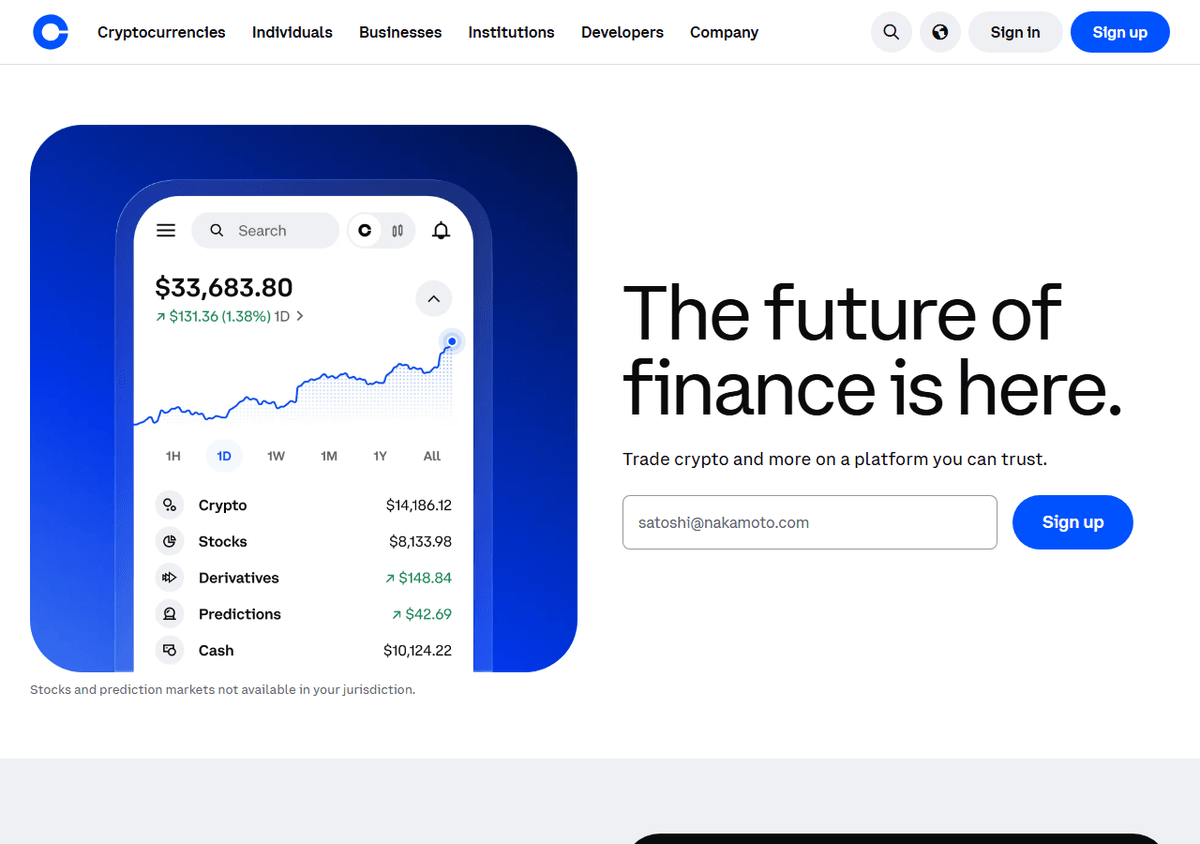
Cash App’s help pages say its bitcoin service is offered by Block, Inc., and that buying bitcoin requires identity verification (legal name, date of birth and part of a Social Security or ITIN number, with more asked in some cases). Its operations page says you own your bitcoin under its terms, that it keeps most in cold storage and does not lend it, and that you can withdraw to another wallet. A first withdrawal may need extra personal information, and withdrawals cannot be reversed. Its pricing page says a fee may apply to market buys and sells depending on transaction size, that Auto Invest and Round Ups purchases carry none, and that a spread may be included in the quoted rate.
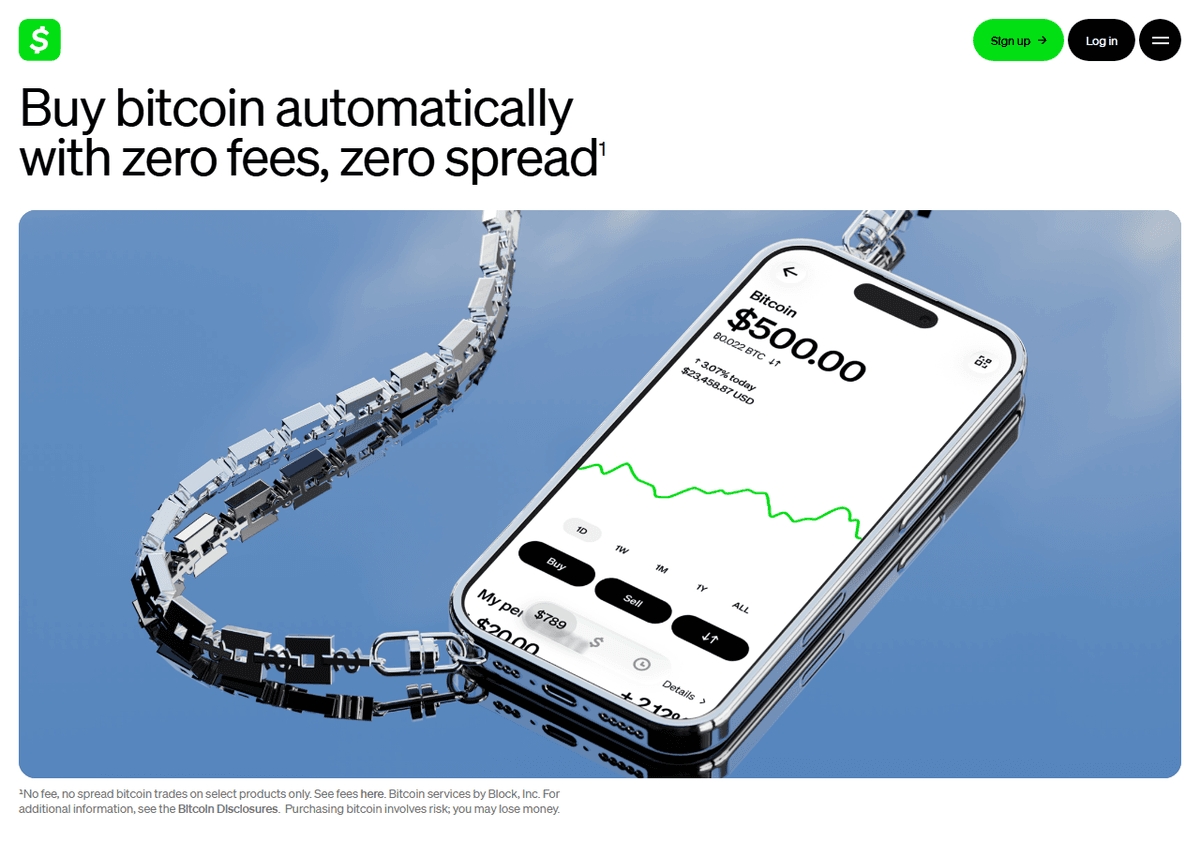
The footnote under the headline is worth reading: the page itself limits the no-fee, no-spread claim to select products. A headline rarely describes every purchase. The full sequence, from a first buy to a withdrawal, is in How to Buy Bitcoin on Cash App.
Coinbase
Coinbase’s help page says Coinbase.com is a centralized exchange that holds your crypto for you in a hosted wallet, that Coinbase maintains the private keys, that the assets are yours and never belong to Coinbase, and that it does not lend them unless you instruct it to. Its send page says on-chain sends to an outside address are supported, carry network fees and cannot be reversed. Coinbase requires identity verification at account creation and says accounts have limited functionality until it is done. Its fee page describes a Coinbase fee on buys, sells and conversions, a spread on simple orders, no spread on Coinbase Advanced and a network fee on sends out.
Kraken
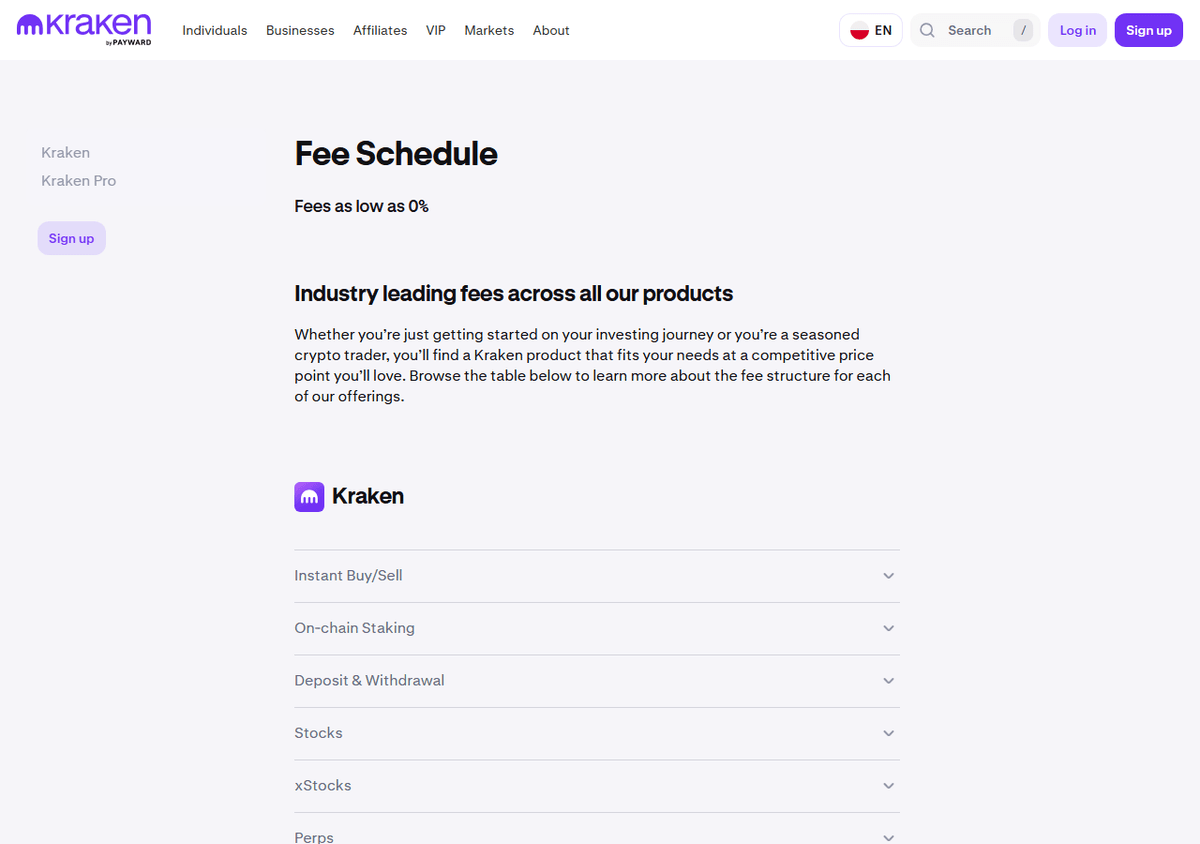
Kraken’s support article says it is an exchange where clients deposit funds to its corporate wallet for safekeeping while they are traded or staked, and that it also offers a separate self-custodial app, Kraken Wallet. To withdraw to a new crypto address you first add and confirm it, by email unless you add it from a trusted device. Its verification page says your verification status decides which features, products and funding limits you get. Its US quick-start page lists states where it does not offer services and warns that geographic restrictions may apply. Its fee schedule describes a trading fee plus a spread on instant buys, payment-method fees, volume-based tiers on Kraken Pro, and deposit and withdrawal fees that vary by method and currency.
PayPal
PayPal’s crypto terms say your balance represents ownership of an amount of each asset, held by PayPal as your agent in omnibus accounts, and that you do not own any specific, identifiable coin. They say some custody, trading and transfer services are performed by Paxos Trust Company or another licensed provider, and state that crypto assets are not insured by the FDIC or SIPC. Its help pages say you can send crypto to outside wallets after an additional level of verification, with a network fee, a minimum and a weekly limit. The terms add that buys and sells include a spread on top of any disclosed fee. Can You Buy Bitcoin With PayPal? goes deeper.
Strike
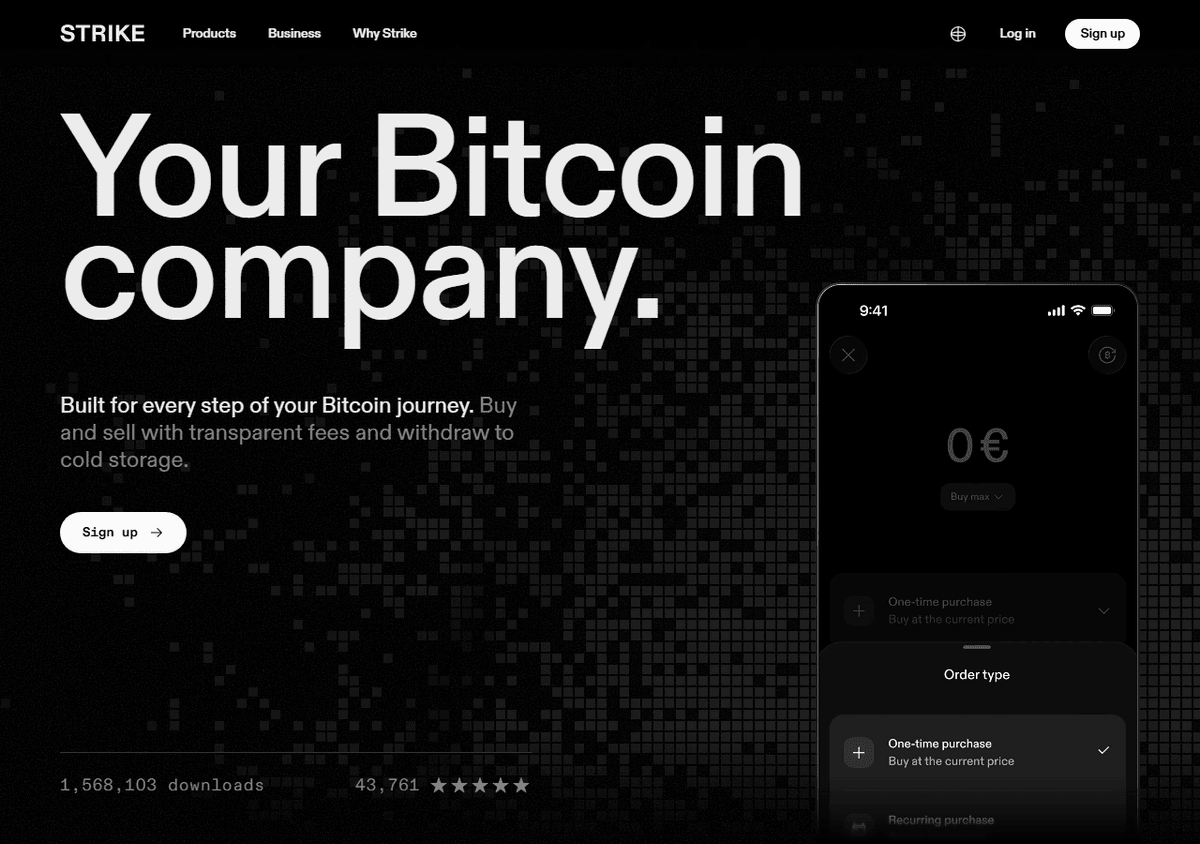
Strike’s US terms for individuals say Strike holds the bitcoin in your account as your agent and custodian, with you as the ultimate beneficial owner, and that bitcoin is not protected by deposit insurance. The same terms say you may be able to send bitcoin to an external address, that federal law requires Strike to verify who opens an account and that it may require enhanced verification. They describe a deposit fee for moving dollars in, a buy and sell fee based on your monthly trading volume, rates that may include spreads, and a network or Lightning fee on sends out. Its home page describes withdrawing to cold storage.
Who holds the bitcoin after you buy it?
On an exchange or app, the company holds the bitcoin and you hold a balance in your account. The pages above word this differently. Cash App says you own your bitcoin, Coinbase says the assets never belong to Coinbase, PayPal says you own no specific coin and Strike calls itself your custodian. None of them says you hold the private keys while the bitcoin is in the account.
A balance is only as good as the company behind it. The coat-check comparison in How to Choose a Crypto Exchange fits: the ticket is useful, but it is not the coat. Crypto balances are not covered by FDIC deposit insurance, which fdic.gov explains for bank deposits, and PayPal’s and Strike’s terms say so too. What Happens to Your Crypto if an Exchange Goes Bankrupt? looks at past cases.
Withdrawing tests how much control you have. Send a small amount to a wallet you control first, and check the address character by character.
How do the fees work?
Fees come as a trading fee, a spread, a payment-method charge and a network fee when you withdraw. The spread is the gap between the market rate and the rate you are quoted, and it can be the largest cost even when the headline fee is zero.
Cash App, Coinbase and PayPal each say the fee or the quoted rate is shown before you confirm. Use that screen, and compare the amount of bitcoin you would receive for the same dollars. Cards usually cost more than bank transfers, as How to Buy Bitcoin With a Debit Card explains, and a credit card may be treated as a cash advance, as Can You Buy Bitcoin With a Credit Card? covers. Bitcoin Fees Explained separates each charge.
How do you choose where to buy?
Use a checklist and let your own needs break ties.
- Legal status. Find the company’s legal name and how it says it is licensed or registered. Is Bitcoin Regulated in the US? explains who oversees what.
- Custody and withdrawals. Read what it says it does with your bitcoin, and whether and how you can withdraw to your own wallet.
- Fee disclosure. Look for a plain fee page and a full cost preview before you confirm.
- Security features. Look for app-based two-factor authentication, withdrawal address confirmation and alerts.
- Support. Check how you reach a person if an account is locked.
- Your state and your goal. Some services are restricted by state, and a fund share, a balance and your own coins are different goals.
Only use a website or app you reached yourself, never a link from a stranger. How to Choose a Crypto Exchange gives the longer safety checklist, How to Buy and Secure Bitcoin walks through a first purchase, and Should I Buy Bitcoin? is about the decision itself.
This page is general education and not personal advice. A qualified financial professional can help with your situation, and the Start Here path covers the basics.
Where to go next
- How to Choose a Crypto Exchange: A Safety Checklist: the questions to ask any company that holds your coins.
- The Power of Self-Custody: Owning Your Own Keys: what changes when you hold the keys.
- Bitcoin Fees Explained: Exchange Fees vs Network Fees: how to compare what platforms charge.
Frequently asked questions
Where is the best place to buy bitcoin?
There is no single best place. The right choice depends on what you get (coins or a balance), whether you can withdraw to your own wallet, how the company charges, what identity checks apply and which services your state allows. Compare final quotes, read the company's own custody and fee pages, and start with a small amount.
Can you buy bitcoin on Cash App, PayPal or Strike?
According to their own pages as of October 2026, Cash App, PayPal and Strike each let eligible US customers buy bitcoin in their apps after identity verification. Each also describes a way to send bitcoin to an outside wallet, with conditions such as extra verification, network fees, minimums or limits. Availability and terms change, so check each company's current pages.
Do you own the bitcoin you buy on an exchange or app?
Usually the company holds the bitcoin for you and you hold a balance in your account. Companies word this differently, but none of the pages reviewed says you hold the private keys while the bitcoin is in the account. To hold the keys yourself, you would need to withdraw to a wallet you control.
Is a spot Bitcoin ETF the same as buying bitcoin?
No. A spot Bitcoin ETF is a fund. You buy shares through a brokerage account, and the fund holds the bitcoin. You own shares, not coins, and you cannot withdraw bitcoin from the fund to a wallet.
What fees should you expect when buying bitcoin?
Fees are usually a mix of a trading fee, a spread built into the quoted price, a charge that depends on the payment method and a network fee when you withdraw to another wallet. Amounts change, so compare the final amount of bitcoin you would receive for the same dollars.
Related articles