Security7 min read
What Happens to Your Crypto if an Exchange Goes Bankrupt? Custody, Proof of Reserves and Past Cases
What happens to crypto on an exchange that goes bankrupt? Three past cases, what proof of reserves can and cannot show, and what can protect customers.
By Christopher CannucciariPublished
On this page

Key takeaways
- Whether crypto on an exchange is yours or the company’s depends on the platform’s terms and the law that applies. Courts have decided it case by case, so this article describes named cases.
- In the US Celsius case, a judge ruled in January 2023 that assets in Earn accounts were presumptively the company’s, because of its terms of use.
- In FTX’s US Chapter 11 case, customer claims are valued in dollars as of the 11 November 2022 filing date. In the Mt. Gox case in Japan, repayments began in 2024, a decade after the 2014 filing.
- Proof of reserves is a snapshot of assets. It cannot by itself show what a company owes, and Kraken’s own page lists its limits.
- Reading the terms, keeping only what you need on a platform and testing withdrawals lowers the risk. Self-custody removes this risk and adds others.
Is the crypto on an exchange yours or the company’s?
A balance on an exchange is an entry in the company’s records, and whether it gives you ownership of particular coins or only a claim against the company depends on the exchange’s terms and on the law that applies. Courts have decided this case by case, so this article describes three named cases, two in the US and one in Japan. They show what happened to those customers, not what would happen to you.
The question underneath is whether a customer is closer to someone who lent coins to a company or to someone who stored coins with it. How to Choose a Crypto Exchange lists the terms worth reading, and Bitcoin Stocks Explained makes the same point about exchanges.
What did the Celsius ruling decide?
In the US Bankruptcy Court for the Southern District of New York, Chief Judge Martin Glenn ruled on 4 January 2023 on who owned the crypto in Celsius’s “Earn” accounts. Celsius had filed for Chapter 11 protection on 15 July 2022. The court held, on the basis of that company’s terms of use, that assets deposited in Earn accounts became Celsius’s property. It also held that assets still in the accounts on the filing date became property of the bankruptcy estate, subject to defenses reserved for later.
Account holders were therefore unsecured creditors, with claims against the company and not a right to take back specific coins. The opinion adds that this did not mean they would get nothing: their claims could be paid in dollars or in kind, depending on a confirmed plan. It did not decide ownership of assets in Celsius’s separate Custody, Withhold and Borrow programs, or whether any individual account holder had a defense. The ruling rests on one company’s contract, so it cannot tell you how another platform’s accounts would be treated.
What happened to FTX customers?
In FTX’s US Chapter 11 case, customers became creditors with claims, and the court-approved plan values those claims in dollars as of the filing date, not in coins. According to the claims agent’s case page, FTX Trading Ltd. and 101 affiliated debtors filed voluntary Chapter 11 petitions on 11 and 14 November 2022 in the US Bankruptcy Court for the District of Delaware.
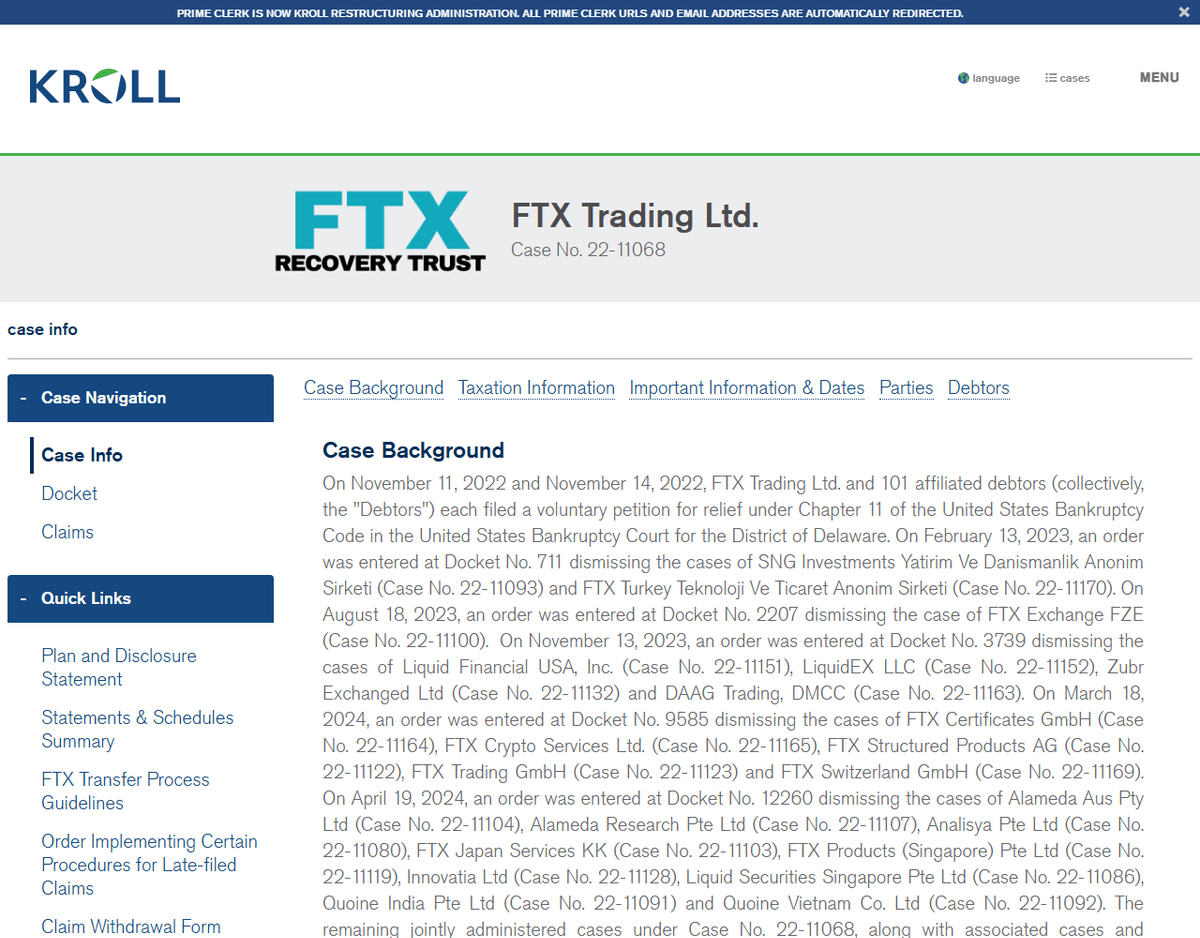
Press reports say Judge John Dorsey approved the plan at a hearing in October 2024, with repayment measured against account values as of November 2022. The Block reported that some creditors argued for payment in cryptocurrency instead, and the court approved the dollar-based plan.
Repayment has come in rounds through the FTX Recovery Trust. Its press release for the second distribution, set for 30 May 2025, says creditors had to log in to the customer portal, complete identity checks, submit tax forms and sign up with a distribution provider before each record date. It also warns about fake FTX emails and sites and says FTX will never ask you to connect your wallet. Percentages change with each round, so use the Trust’s own notices. The Altruists on Netflix covers the criminal case.
What happened to Mt. Gox customers?
Mt. Gox, an exchange based in Tokyo, filed for bankruptcy protection in Japan on 28 February 2014, and its creditors’ repayment process was still under way in October 2026. Wire reports of that day said it had ceased operations earlier in the week and had lost track of a very large amount of bitcoin, including coins belonging to customers. The reports said it was unclear whether the coins were stolen, lost through technical flaws, or both.
The trustee’s website, mtgox.com, records what followed in the Tokyo District Court: a bankruptcy decision published in April 2014, civil rehabilitation proceedings from 22 June 2018, and a rehabilitation plan confirmed in October 2021. Repayments in Bitcoin and Bitcoin Cash began after a notice dated 24 June 2024. The deadline has been extended several times since 2023, so check the trustee’s site for the current date. The site also warns of fake websites and emails using the Mt. Gox name.
| Case | Court and place | What the record shows | What customers hold |
|---|---|---|---|
| Celsius | US Bankruptcy Court, Southern District of New York | January 2023 ruling: Earn account assets presumptively the estate’s under that company’s terms | Unsecured claims for Earn assets; other programs not decided in that ruling |
| FTX | US Bankruptcy Court, District of Delaware | Chapter 11 filed November 2022; plan approved October 2024 | Claims valued in dollars as of the filing date, paid in rounds |
| Mt. Gox | Tokyo District Court, Japan | Filed February 2014; civil rehabilitation from 2018 | Repayments in Bitcoin and Bitcoin Cash since 2024 |
What is proof of reserves, and what are its limits?
Proof of reserves is evidence an exchange publishes about the assets it holds, often built so that customers can check that their own balance was counted. Its limits matter as much as its method.
Kraken’s page is a useful example, and this article does not rate Kraken or any other exchange. As of October 2026, the page says in substance that an independent external accountant takes a snapshot of client balances. It builds them into a data structure called a Merkle tree. The accountant then checks that the assets the company proves it controls meet or exceed those balances.
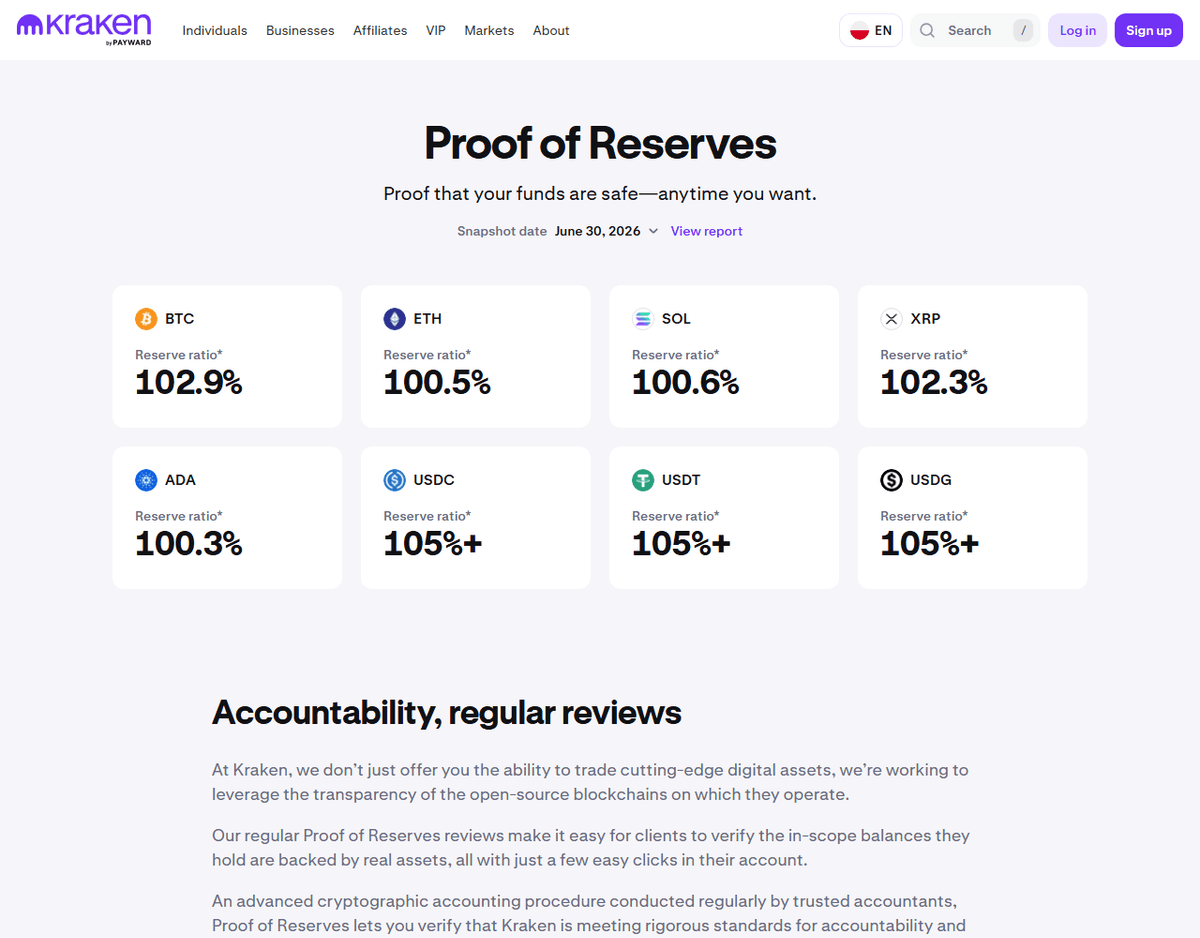
The same page lists what the review does not show. By its own account it does not confirm sole possession of the private keys and cannot detect hidden liabilities. It also cannot show that funds were not borrowed only to pass the review. And it notes that keys may have been lost or funds stolen since the review. A 2022 post on Kraken’s blog adds that a full proof of reserves needs proof of liabilities as well as assets and an independent auditor, and that no formally accepted rules define such an audit.
A headline and a method note can differ in scope, and the method note tells you what was actually checked. A snapshot can show control of certain assets at one moment. It cannot show what the company owes in total, or what has happened since.
What can protect customers?
No single feature protects customers in a failure, and each has limits.
- The terms. Look for who owns deposited assets, whether the company can lend or reuse them and whether customer assets are kept apart from its own. In Celsius, the terms decided the outcome for Earn accounts.
- Licensing and regulation. Check how the company is registered where you live. Registration is a minimum bar and does not prevent losses.
- Insurance statements. Crypto accounts are not backed by a government, as the FTC’s consumer page on crypto states. Private insurance has limits and exclusions, so ask what it covers.
- The amount you keep there. How to Store Bitcoin helps decide how much goes where.
- A tested withdrawal. Send a small amount to your own wallet before you rely on the platform.
Is self-custody the alternative?
Holding your own keys takes the exchange out of the picture, so a company’s failure cannot freeze your coins. It also moves other risks to you: lost recovery words cannot be replaced, a fake wallet can drain you, and there is no help desk. The Power of Self-Custody explains the trade-off, and What Is a Hardware Wallet? covers the most common device. Is Bitcoin Safe? places a platform’s failure among the other risks.
What should you watch for after a collapse?
Scams often follow a collapse, and a fake “claims” page can look like the real one. Go to the official claims site by typing its address, never through a link someone sends you. Common Bitcoin Scams and How to Spot Them covers the pattern, and How to Report a Crypto Scam in the US explains where to report one.
Where to Buy Bitcoin in the US compares the kinds of places to buy. If you have money at a failed platform, ask a lawyer who handles bankruptcy claims, since this article is education and not legal or financial advice. New to Bitcoin? The Start Here path covers the basics.
Where to go next
- The Altruists on Netflix: The FTX Series and What the Collapse Teaches: the FTX timeline and its lessons.
- How to Choose a Crypto Exchange: A Safety Checklist: questions to ask before you deposit.
- The Power of Self-Custody: Owning Your Own Keys: what changes when you hold the keys.
- How to Report a Crypto Scam in the US: FTC, FBI IC3, SEC and CFTC: where to report fraud.
Frequently asked questions
Is my crypto mine if the exchange goes bankrupt?
It depends on the exchange's terms and the law that applies, and courts have decided it case by case. In the US Celsius case, a judge ruled on 4 January 2023 that assets in Earn accounts were presumptively the company's because of its terms of use. Read the terms of any platform you use.
Did FTX customers get their crypto back?
In FTX's US Chapter 11 case, customers became creditors with claims, and the court-approved plan values those claims in dollars as of the 11 November 2022 filing date, not in coins. Payments have come in rounds through the FTX Recovery Trust, whose own notices have current figures.
What happened to Mt. Gox customers?
Mt. Gox filed for bankruptcy protection in Japan on 28 February 2014. Under proceedings in the Tokyo District Court, repayments in Bitcoin and Bitcoin Cash began in 2024, according to the trustee's notices, and the repayment deadline has been extended several times. The trustee's website has the current date.
Does proof of reserves mean an exchange is safe?
No. Proof of reserves is a snapshot of assets at one date. Kraken's own page says its review cannot detect hidden liabilities, cannot show funds were not borrowed to pass the review and does not confirm sole control of private keys. It is one piece of evidence, not a guarantee.
How can I reduce the risk of keeping crypto on an exchange?
Read the terms on custody and use of customer assets, check how the company is licensed where you live, treat insurance claims with care and keep on the platform only what you need to trade or spend. Test a withdrawal to your own wallet, and decide separately whether to hold the rest yourself.