Security8 min read
How to Report a Crypto Scam in the US: FTC, FBI IC3, SEC and CFTC
Where to report a crypto scam in the US: what the FTC, FBI IC3, SEC and CFTC each take, what to gather first and why paid recovery offers are a trap.
By Christopher CannucciariPublished
On this page

Key takeaways
- No single agency takes every crypto scam report. The FTC takes fraud and scams of almost any kind, the FBI’s IC3 takes cyber-enabled crime, the SEC takes tips about securities fraud and the CFTC takes tips about violations of the Commodity Exchange Act. You can file with more than one.
- Reporting helps investigators but is not a refund. The FTC says it cannot resolve individual reports, and the FBI says it cannot respond to every complaint.
- Collect the transaction ID, wallet addresses, amounts, dates, messages and website addresses before you file.
- Anyone who offers to get your money back for a fee is a red flag. The FBI warns of recovery schemes, and the IC3 says it will never contact you for money.
- This is general US information as of October 2026 and not legal advice.
What should you do in the first hours?
Stop sending money, then contact whoever moved it for you. That includes any “fee”, “tax” or “unlock” payment the scammer asks for. A joint SEC and CFTC alert on fake crypto trading sites describes this advance-fee pattern, in which investors are told to pay extra to withdraw “profits” that do not exist. The same demand is a late stage of pig butchering scams, which often begin with a friendly message from a stranger.
The FTC says that if you paid with cryptocurrency you should contact the exchange or crypto ATM operator right away, say the transaction was fraudulent and ask for a reversal. It also warns that crypto payments typically are not reversible and lack the protections of credit and debit cards, so a reversal is a long shot. The FBI adds that exchanges freeze accounts only through their own processes or legal process. If a card, bank transfer or payment app was involved, contact that company at once.
Then secure your accounts. The FTC says to change the password on any account you handed over and anywhere you reused it, and to turn on two-factor authentication. If a scammer had access to your computer or phone, it says to update your security software and run a scan. If a recovery phrase may be exposed, Fake Crypto Wallets and Websites covers moving funds to a new wallet. If anyone is in immediate danger, the IC3 says to call 911 or your local police.
What should you gather before you file?
Gather transaction details and a timeline. The FBI says the most important information is the cryptocurrency addresses, the amount and type of cryptocurrency, the date and time and the transaction ID, also called the hash. It adds that if you are unsure whether a detail is relevant, include it. Without transaction details, it still wants a report.
| What to collect | Where it usually lives |
|---|---|
| Your address and the scammer’s address | The send screen or history in your wallet, or the exchange’s withdrawal record |
| Amount and type of cryptocurrency | The same records |
| Date and time | Wallet history, exchange statement or bank statement |
| Transaction ID (hash) | The wallet or exchange record; see What Is a Bitcoin Transaction ID? |
| Messages, names, emails, phone numbers, usernames | Screenshots of the chat or inbox, saved before you block anyone |
| Website addresses and app names | Browser history, app store, the link you were sent |
| Timeline | Write it down while your memory is fresh |
The FBI also asks where and how you first met the scammer, any one-time passcodes you shared and which exchanges you used. How to Check a Bitcoin Transaction shows how to confirm that an ID matches your payment. The FTC cannot accept uploaded documents, so it suggests pasting message text into the report’s Comments field and keeping the originals, because law enforcement may ask for them.
Which agency takes which kind of report?
Start with the FTC and the FBI’s IC3, which take reports broadly, then add the SEC or CFTC if the scam was an investment or trading pitch. Each agency’s own page describes what it takes.
| Agency | What its page says it takes |
|---|---|
| FTC, ReportFraud.ftc.gov | Anything you think may be a fraud, scam or bad business practice, even if you lost no money |
| FBI, Internet Crime Complaint Center (ic3.gov) | Cyber-enabled crime, from frauds and scams to cybercrime |
| SEC, sec.gov/tcr | Tips about securities fraud, such as Ponzi schemes and fraudulent or unregistered offers of securities |
| CFTC, cftc.gov/complaint | Information about violations of the Commodity Exchange Act or CFTC regulations |
FTC: ReportFraud.ftc.gov
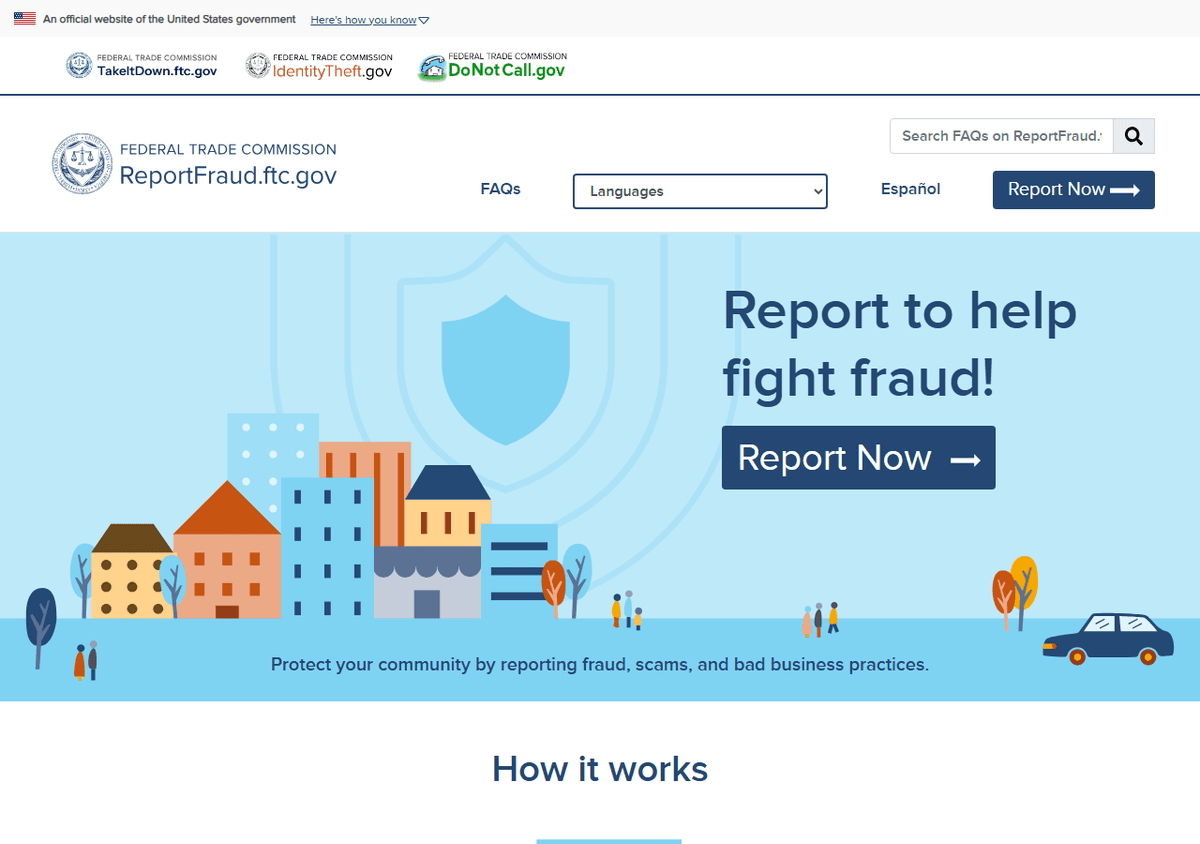
The FTC’s ReportFraud.ftc.gov takes reports of fraud, scams and bad business practices, and the FTC says to report even if you are not sure it is a scam. Its FAQ says reports go into the Consumer Sentinel database available to federal, state and local law enforcement, and it names your state attorney general or local consumer protection agency as other places to file. The FTC home page has its consumer advice.
FBI: Internet Crime Complaint Center
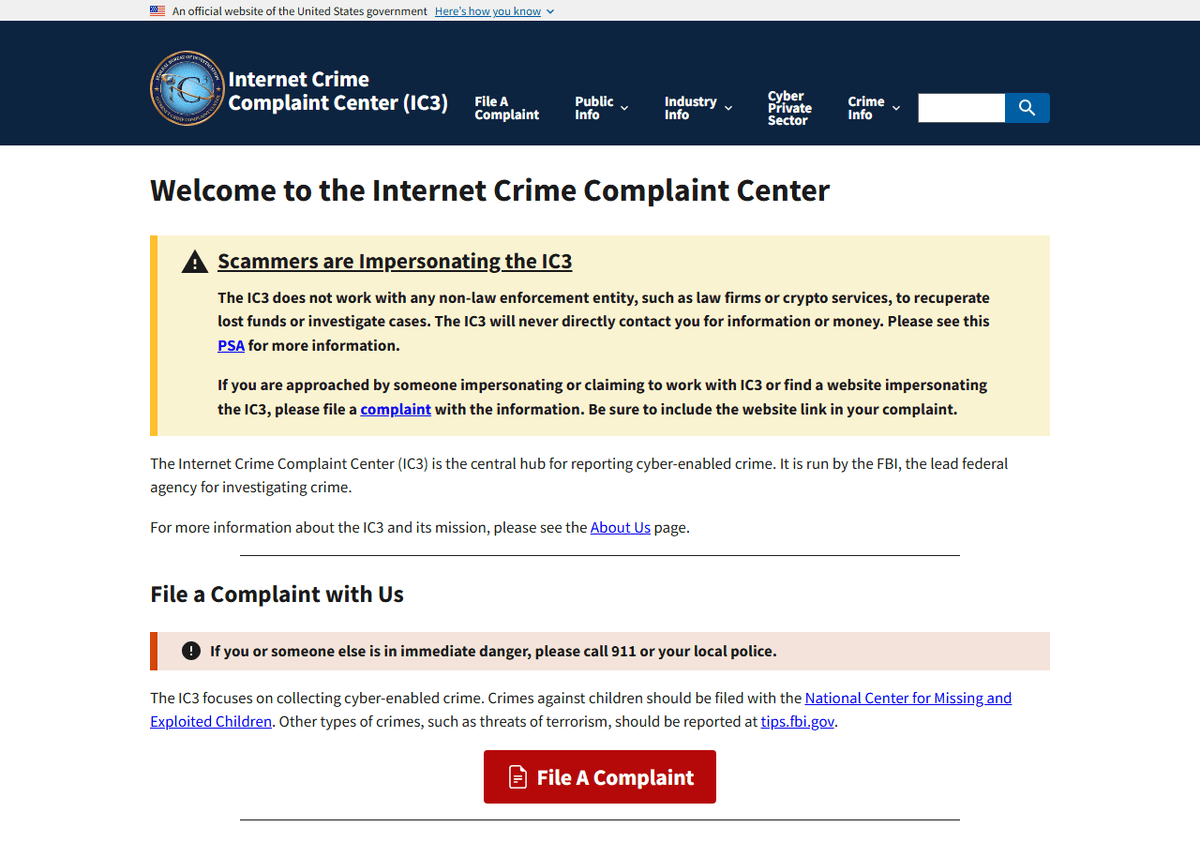
The IC3 describes itself as the central hub for reporting cyber-enabled crime, run by the FBI. Its home page says to file a report even if you are unsure whether your complaint qualifies, and its cryptocurrency page encourages complaints even if no financial loss occurred. The FBI’s guidance for cryptocurrency scam victims also says to contact your local FBI field office.
SEC: tips about securities fraud
The SEC’s page lists the tips it takes, starting with a fraudulent or unregistered offer or sale of securities, including Ponzi schemes, pyramid schemes and high-yield investment programs. It also lists theft or misappropriation of funds or securities. It does not mention crypto by name, and whether a scheme involves a security is a legal question. A joint SEC and CFTC alert on fake crypto trading sites says to report an offering you think may be fraudulent, or a demand for more money to get your own back, to the SEC or CFTC. The SEC’s home page is https://www.sec.gov/.
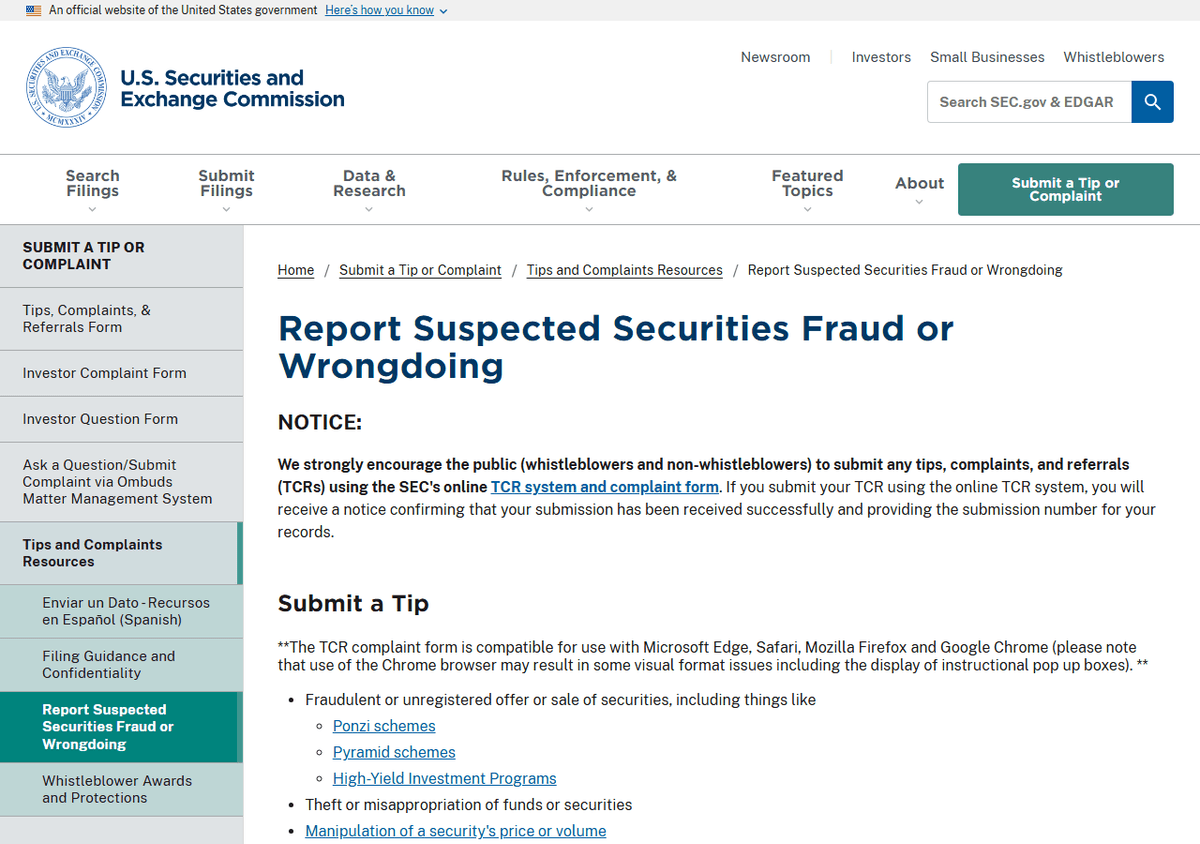
The SEC says you may submit a tip anonymously, and that its staff are generally unable to comment on any action they take.
CFTC: tips about commodities and derivatives violations
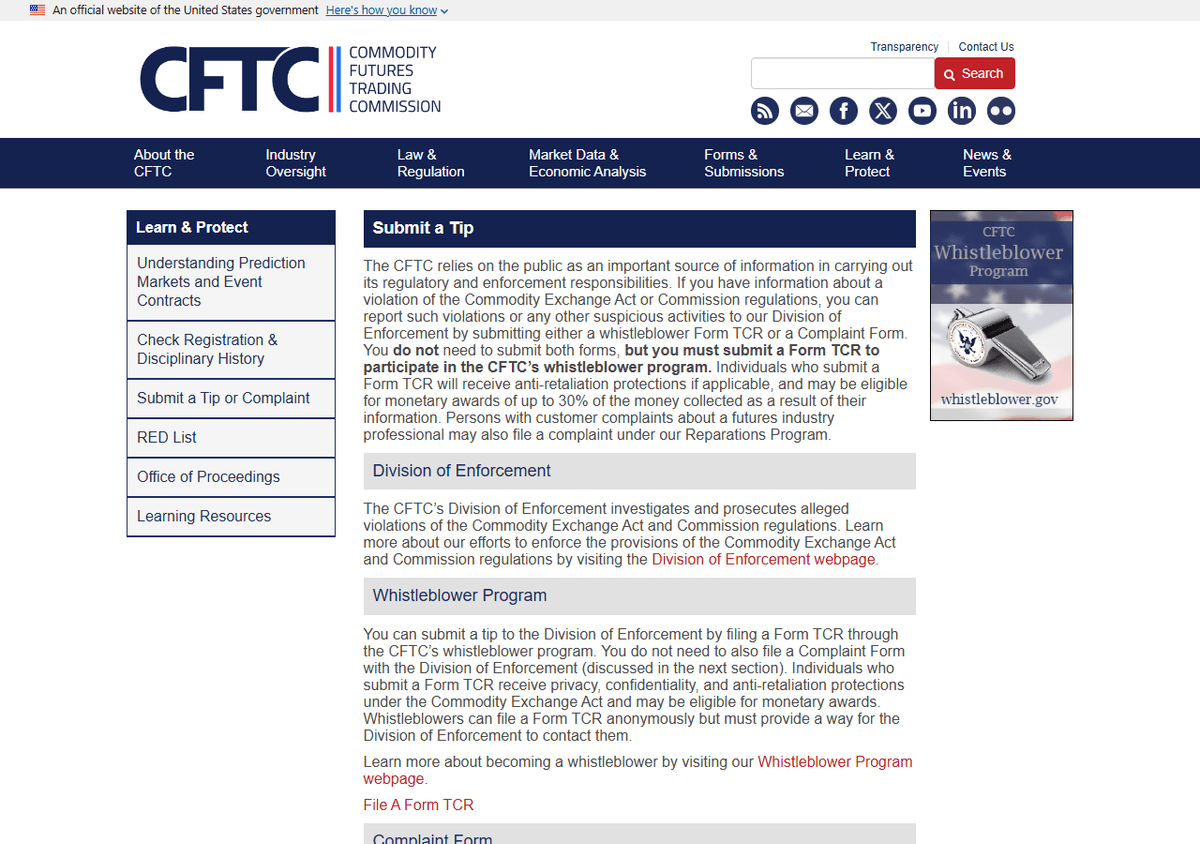
The CFTC’s page says you can report a violation of the Commodity Exchange Act or Commission regulations to its Division of Enforcement, using either a whistleblower Form TCR or a Complaint Form, not both. Only a Form TCR makes you eligible for the whistleblower program. The page does not mention crypto, but the FTC’s crypto scam guidance lists the CFTC alongside the SEC and IC3 as a place to report.
If you cannot tell which agency fits, file with the FTC and the IC3 and add the others if the scam involved investment returns or trading. Your bank, card issuer, payment app and the crypto platform you used are separate places to report, and local police can take a report too. Some banks and platforms may ask for a police report number, so ask them.
What can you expect after you report?
Expect a record of your report and possibly some next steps, not a refund. The FTC says it cannot resolve your individual report or respond to each one, but it offers next steps after you submit and emails them if you add an address. When the FTC brings cases, it says it tries to get money back for people.
The FBI says it cannot guarantee a response to every complaint but that reports help it investigate, track trends and, in some cases, freeze stolen funds. The SEC says it investigates confidentially. Keep any submission or reference number you receive. For how scams start, see Common Bitcoin Scams and How to Spot Them.
Can anyone get your crypto back for a fee?
Be very wary, because recovery offers are a known second scam. The FBI warns of an increase in fraudulent crypto recovery services. It says they charge an up-front fee and then stop replying or demand more, may claim ties to law enforcement or legal services and may reach you through social media, search results or comments under news articles. It also says private recovery companies cannot issue seizure orders and that law enforcement does not charge victims to investigate.
The IC3 repeats the point on its home page: it does not work with law firms or crypto services to recuperate lost funds, and it will never directly contact you for information or money. Victims can pursue civil litigation, the FBI notes, and a licensed attorney can explain that route.
Where does this information come from?
The facts here come from each agency’s own pages, read in October 2026. They include ReportFraud.ftc.gov and its FAQ, the FTC’s advice on crypto scams, and the IC3 home and cryptocurrency pages and its 2023 public service announcements. They also include the SEC’s tip and filing guidance pages, the CFTC’s Submit a Tip page and the joint SEC and CFTC investor alert. Some are years old, and forms and procedures change, so use each agency’s current page. The Bitcoin statistics page has sourced loss figures, which this page does not repeat.
Prevention matters most. Is Bitcoin Safe? covers the wider risks, Bitcoin ATMs the cash-deposit scam, Can You Buy Bitcoin With a Credit Card? card-based pitches and Can You Buy Bitcoin Anonymously? the “no ID, no limits” offers. New to Bitcoin? The Start Here path lists the core guides. This is general information. For money already lost, a licensed attorney or your state’s consumer protection office can explain your options.
Where to go next
- Common Bitcoin Scams and How to Spot Them: the scams grouped by how they start, with red flags.
- Is Bitcoin Safe? The Real Risks and Common Scams: fraud in the context of the other risks.
- Fake Crypto Wallets and Websites: How to Tell the Real One: lookalike sites, clone apps and what to do if you typed your phrase.
- Bitcoin ATMs: How They Work, What They Cost and the Scams to Avoid: the cash-deposit pattern in detail.
Frequently asked questions
Where do I report a crypto scam in the US?
Most victims start with the FTC at ReportFraud.ftc.gov and the FBI's Internet Crime Complaint Center at ic3.gov. If the scam was an investment pitch, the SEC takes tips about securities fraud and the CFTC takes tips about violations of the Commodity Exchange Act. You can also contact your state attorney general, your bank or card issuer, and the platform you used.
What information should I have ready?
Transaction details come first: wallet addresses, the amount and type of cryptocurrency, dates and times and the transaction ID. Add how you met the scammer, their names, emails, phone numbers and usernames, any websites or apps they told you to use, which exchanges you used and a timeline of what happened.
Can I get my money back after I report?
Not reliably. The FTC says it cannot resolve individual reports, the FBI says it cannot respond to every complaint and cryptocurrency payments typically cannot be reversed. Reports help investigators, and contacting your bank, card issuer or the platform quickly may sometimes help.
Is it worth reporting if I lost little or nothing?
Yes. The FTC says you can report even if you did not lose money, and the FBI encourages complaints even when no financial loss occurred. Reports help investigators spot patterns and may protect other people.
Should I pay someone who offers to recover my stolen crypto?
No. The FBI warns that fraudulent recovery services charge up-front fees and then disappear or ask for more, and that private recovery companies cannot issue seizure orders. The IC3 says it does not work with law firms or crypto services to recover funds and will never contact you for money.
Related articles